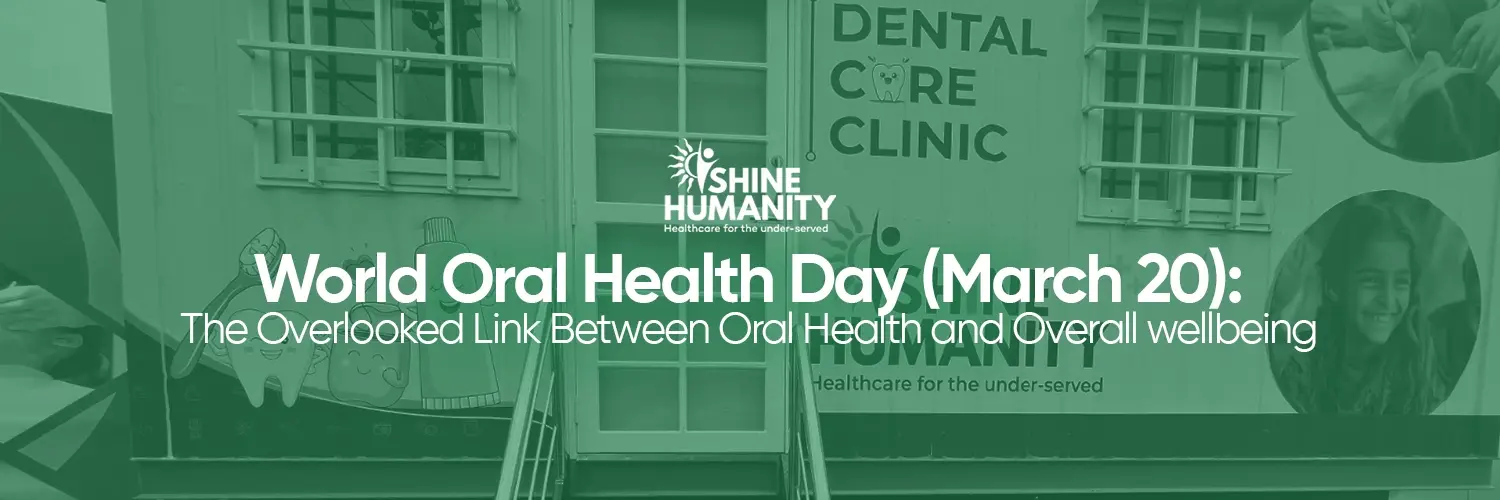
World Oral Health Day: The Overlooked Link Between Oral Health and Your Overall Wellbeing
Every year on March 20, World Oral Health Day gives the global health community a reason to address something most people brush aside until the pain becomes unbearable. Dental problems are not just about cavities or bad breath. They signal much deeper health issues that affect the entire body.
For millions of Pakistanis in underserved communities, this connection remains unknown, unaddressed, and dangerously ignored.
What Your Mouth Is Really Telling You
Most people treat dental health as a separate concern. You visit the dentist when something hurts, get it fixed, and move on. But that thinking misses the bigger picture entirely. Your mouth is the entry point to your body. Bacteria from infected gums do not stay local. Over time, untreated oral disease creates pathways for infection to reach vital organs, contributing to conditions that go far beyond toothache.
This is what healthcare professionals refer to as the link between oral health and systemic health, and it carries far more weight than most people realize. Treating it as a cosmetic concern is one of the costliest mistakes in preventive healthcare.
What the Science Actually Says
The connections between dental disease and systemic illness are well-documented, not theoretical. Here is what the evidence shows:
Heart disease: People with periodontal disease are significantly more likely to develop cardiovascular conditions. Oral bacteria trigger chronic inflammation that can contribute to arterial blockages over time.
Diabetes: The relationship goes both ways. Poorly managed blood sugar worsens gum disease, and untreated gum disease makes controlling blood sugar harder. For diabetic patients, dental care is not optional. It is part of disease management.
Pregnancy complications: Severe gum disease has been linked to premature birth and low birth weight. For expectant mothers in rural Sindh, where maternal health outcomes are already fragile, this risk is particularly serious.
Respiratory diseases: Bacteria from the mouth can be inhaled into the lungs, worsening conditions like pneumonia and COPD. This is especially concerning for elderly patients and those with weakened immunity.
Preventing dental diseases is, in many cases, preventing these very outcomes.
The Reality in Rural Pakistan
On World Oral Health Day, conversations around preventive dental care must include communities where dental services remain out of reach. Rural areas of Sindh illustrate this gap clearly, where limited access to dentists and low oral health awareness allow minor dental problems to develop into serious health conditions.
Pakistan carries one of the highest burdens of preventable disease in the region. Oral health awareness, however, rarely enters that conversation. In communities like Gharo in rural Sindh, most families have never visited a dentist. Not because they do not care, but because no dental professional has ever been within accessible reach. The consequences are visible. Children grow up with painful, untreated cavities. Adults lose teeth to infections that could have been managed with routine cleanings.
Elderly patients suffer from oral conditions that quietly worsen their existing illnesses, because nobody has ever connected their toothache to their heart condition or blood sugar levels. Many people in these areas do not know that swollen gums are a warning sign, or that bleeding while brushing is not normal.
Consistent oral hygiene tips, shared at the community level, could prevent years of suffering and serious downstream health complications.
SHINE Humanity's Mobile Dental Care Unit: Care That Comes to You
Recognizing this critical gap, SHINE Humanity recently launched its first Mobile Dental Care Unit at the SHINE Humanity Garibsons Clinic in Gharo. This is more than a vehicle. It is a fully equipped dental facility on wheels, built to deliver comprehensive care in areas where no such service has ever existed.
The unit provides:
Dental check-ups and professional cleanings
Fillings and tooth extractions
Oral hygiene education for patients and their families
Modern sterilization systems that meet patient safety standards
An onboard water and power supply for uninterrupted service
The Garibsons Clinic in Gharo already serves hundreds of patients each day through a team of qualified doctors offering outpatient care, antenatal services, pharmacy, and ultrasound. Adding dedicated dental care to this model fills one of the most significant gaps in rural primary healthcare delivery.
Consider a mother who brings her child to the clinic for a fever and, in the same visit, gets her child's teeth examined for the first time. That single visit can change the health trajectory of that family.
Oral Hygiene Tips That Make a Real Difference
Preventing dental disease does not require expensive treatment. It starts with knowledge and consistency.
Brush twice daily with fluoride toothpaste
Floss once a day to clear plaque between teeth
Rinse with clean water after meals when brushing is not possible
Cut down on sugary drinks and snacks that accelerate decay
Avoid tobacco in all forms, a leading cause of gum disease and oral cancer
Schedule dental check-ups twice a year, even when nothing hurts
In communities with limited resources, oral hygiene education is the most powerful and cost-effective intervention available. SHINE's dental unit does not only treat. It teaches patients how to protect themselves and their children long after the visit ends.
A Day That Should Mean More Than a Campaign Graphic
World Oral Health Day is observed by dental associations, health ministries, and global health bodies each year. But awareness campaigns only matter when they reach the people who actually need them. In rural Sindh, a child who has never owned a toothbrush will not be reached by a social media post.
Real oral health awareness means bringing that toothbrush, that education, and that dental care physically into the community. It means meeting people where they live, not expecting them to travel hours to receive care they cannot afford. That is the philosophy behind SHINE's approach to community health.
Dental health and wellbeing must be treated as a public health priority, not a premium service for people who can afford urban clinics.
Conclusion
Oral health is a window into your overall wellbeing. Ignoring it does not make the problem smaller. It makes it more painful, more expensive, and far harder to treat. As we mark this occasion, the goal is clear: oral health and overall health must be treated with equal urgency, particularly in communities where both have long been neglected.
SHINE Humanity is working toward that reality, one patient, one clinic visit, one community at a time. Understanding the importance of oral hygiene goes beyond clean teeth. It shapes the quality and length of your life.
Support free dental care for rural communities in Sindh. Donate to SHINE Humanity's healthcare programs and help bring essential oral health services to families who have never had access to a dentist.
Frequently Asked Questions
What is World Oral Health Day and why is it observed on March 20?
It is a global awareness campaign by the FDI World Dental Federation, held every March 20 to promote oral hygiene as a core part of overall health.
How does poor oral health affect the rest of the body?
Untreated gum disease is linked to serious systemic conditions including heart disease, diabetes complications, respiratory infections, and pregnancy risks.
Why do rural communities in Pakistan lack access to dental care?
Distance, cost, and low oral health awareness keep most rural populations from ever reaching a dental professional.
What dental services does SHINE Humanity provide at its Garibsons Clinic in Gharo?
SHINE's Mobile Dental Care Unit offers check-ups, cleanings, fillings, extractions, and oral hygiene education for underserved communities in Gharo.
What are the most effective ways to maintain good oral health at home?
Brushing twice daily, flossing, cutting sugar, avoiding tobacco, and scheduling routine check-ups are the most impactful habits for long-term dental health.