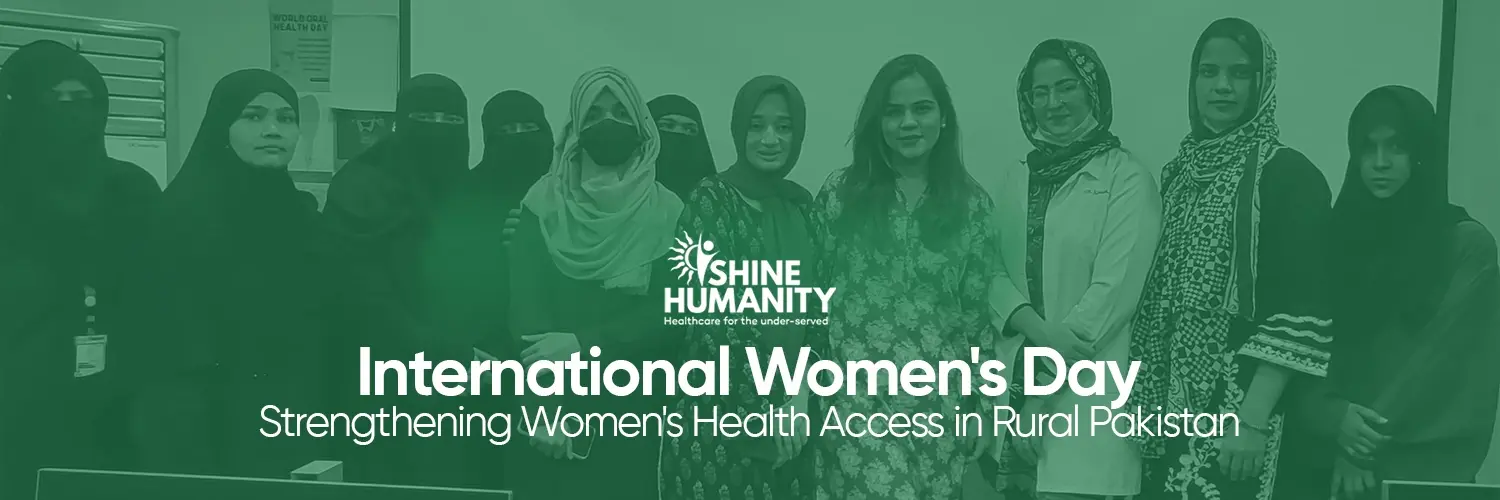
International Women's Day: Strengthening Women's Health Access in Rural Pakistan
Every March 8, the world pauses to celebrate International Women’s Day, a moment dedicated to recognizing women’s achievements and addressing the challenges they continue to face. One of the most pressing yet overlooked issues remains women’s health access in rural Pakistan.
For millions of women living in remote communities, basic healthcare is not easily available. Conversations around women’s health often overlook the realities of rural life, where long travel distances, financial barriers, and limited medical resources make even routine care difficult to access.
Life in Rural Pakistan: Women Carrying the Weight of Families
Nearly two-thirds of Pakistan's population lives in rural areas where healthcare infrastructure remains limited. In these communities, women are central to household stability. Daily life often involves managing homes and childcare, supporting agricultural work, caring for elderly family members, and walking long distances for water and supplies.
Despite these responsibilities, healthcare becomes a secondary priority. Cultural expectations, financial constraints, and geographic barriers prevent women from seeking medical attention until conditions become severe. These realities directly fuel women's healthcare challenges in Pakistan, particularly in underserved regions.
The Hidden Crisis: Healthcare Barriers Women Face
Distance and Limited Facilities
Reaching a healthcare facility can require several hours of travel, making routine checkups nearly impossible.
Financial Limitations
Consultation costs, transport, and lost daily wages discourage families from seeking even preventive care.
Cultural and Social Barriers
Women often need permission to travel for healthcare. The shortage of female doctors further discourages them from discussing sensitive health concerns.
Limited Health Awareness
Basic education around reproductive health, nutrition, and disease prevention remains scarce. Without reliable information, preventable conditions quietly worsen.
These challenges collectively reinforce the ongoing women's healthcare challenges in Pakistan, deepen gender health inequality in Pakistan, and highlight the urgent need for initiatives focused on improving women's health access in rural communities.
Maternal Health Challenges in Rural Communities
Maternal healthcare in rural Pakistan is critically under-supported. Pregnant women in rural districts frequently face few or no prenatal checkups, lack of skilled birth attendants, nutritional deficiencies during pregnancy, and delayed emergency care.
In many rural areas, pregnant women must travel long distances to reach the nearest clinic, often delaying essential care during critical stages of pregnancy.
Access to maternal and reproductive health services remains inconsistent across remote regions. According to the World Health Organization, Pakistan's maternal mortality ratio sits at 186 deaths per 100,000 live births, with rural communities carrying a disproportionate share of that burden. Without proper guidance during pregnancy, complications can quickly become life-threatening.
Community Strength: Women Supporting Women
Despite limited resources, rural communities build strong informal support networks. Women share health knowledge through conversations and community gatherings. Older women guide younger mothers on pregnancy care, nutrition, and childcare.
This peer-to-peer exchange often becomes the only consistent source of health information many women ever receive. In communities where a doctor has never visited and the nearest facility is hours away, a neighbor's advice or a grandmother's guidance can genuinely be the difference between a safe delivery and a crisis. That knowledge, passed down through generations, carries real weight.
When supported by trained healthcare professionals, these informal networks become powerful tools for improving community health outcomes.
The Role of Awareness in Improving Women's Health
Healthcare access is not solved by infrastructure alone. Awareness is equally critical. Health programs help women understand prenatal and postnatal care, menstrual hygiene management, family planning options, nutrition for mothers and children, and prevention of infectious diseases.
Improving women's health access through community engagement has shown meaningful results in maternal and child health outcomes across developing countries.
Sehat Ki Sangat: Empowering Women Through Health Awareness
Programs like Sehat Ki Sangat, led by SHINE Humanity, work to close the knowledge and healthcare gap for women in underserved communities. The initiative creates safe spaces where women can openly discuss health concerns and receive guidance from medical professionals.
Sessions cover menstrual hygiene, reproductive health, family planning, nutrition, communicable and non-communicable diseases, and personal hygiene. Each session is facilitated by a multidisciplinary team of doctors, public health specialists, nutritionists, program coordinators, and community health workers.
Through open discussions and practical guidance, participants better understand their health needs and available support systems. The goal is to build a network of informed women who care for their own health and spread that knowledge within their communities, strengthening healthcare for underserved women from the inside out.
Why International Women's Day Matters for Rural Healthcare
Observing International Women’s Day is not only about celebration but also about recognizing the inequalities women still face in accessing healthcare. Discussions around women’s health must include the realities of rural communities where medical services remain limited.
Highlighting these issues encourages governments, healthcare providers, and nonprofit organizations to prioritize long-term solutions such as community education programs, improved maternal healthcare in rural Pakistan, and stronger healthcare infrastructure.
Conclusion
Improving women's health in rural Pakistan requires sustained effort from governments, healthcare professionals, communities, and nonprofits. Through initiatives like Sehat Ki Sangat, SHINE Humanity is helping women access the knowledge and support that can transform entire communities. This International Women's Day, women's health must move beyond awareness into action that reaches those who need it most.
Learn more about SHINE Humanity's work, donate, or get involved at shinehumanity.org.
FAQs
1. Why is women's health access limited in rural Pakistan?
Long travel distances, financial constraints, limited female doctors, and low health awareness are the primary barriers.
2. What are the major maternal health challenges in rural Pakistan?
Limited prenatal care, lack of skilled birth attendants, poor nutrition, and delayed emergency care during complications.
3. How can community programs improve women's healthcare?
By educating women on hygiene, nutrition, reproductive health, and disease prevention while connecting them with medical professionals.
4. What is the Sehat Ki Sangat initiative?
A SHINE Humanity program that educates women on reproductive health, hygiene, and disease prevention through interactive community sessions.
5. Why is International Women's Day important for healthcare awareness?
It highlights gender inequalities including healthcare access, encouraging organizations and communities to prioritize women's health.